
.png)
.jpg)
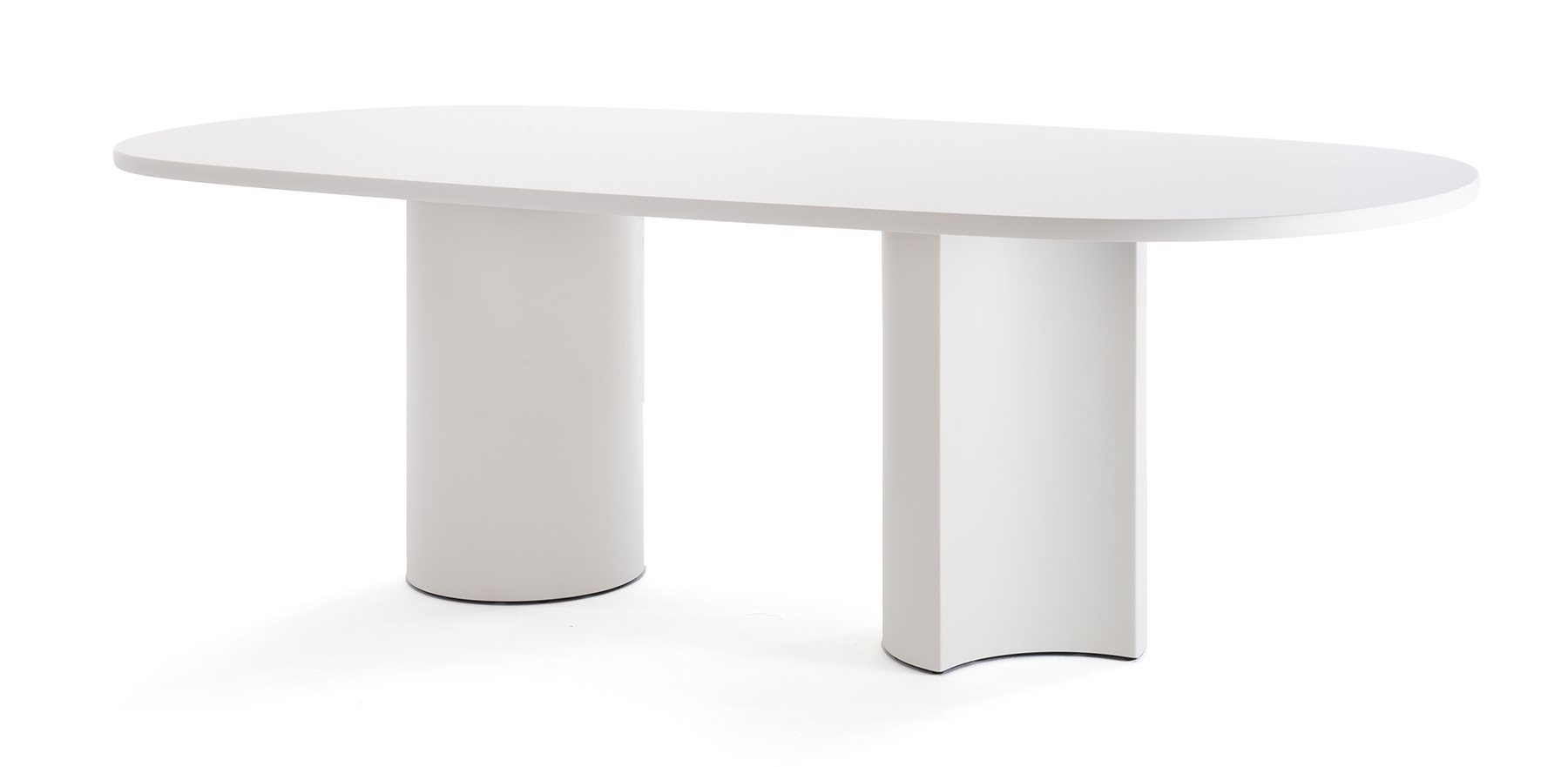
从一张带中央支撑腿的圆桌草图出发,设计师进一步发展出模块化概念,构建出一个完整系列。该系列包括两款圆形桌面(直径分别为135厘米和160厘米)以及两款椭圆形桌面(长度分别为230厘米和260厘米)。设计的核心在于结构底座,它被构思为可单独使用或组合使用的模块化单元,由两个不对称桌腿构成:其中一个腿体源自圆周的一小段切割形成的圆柱体,造型低调却极具辨识度,既具有鲜明的设计语言,也服务于整个系列的结构发展。该桌腿既可单独使用(在桌面尺寸允许的情况下),也可成对组合使用,以提升桌面的整体稳定性。
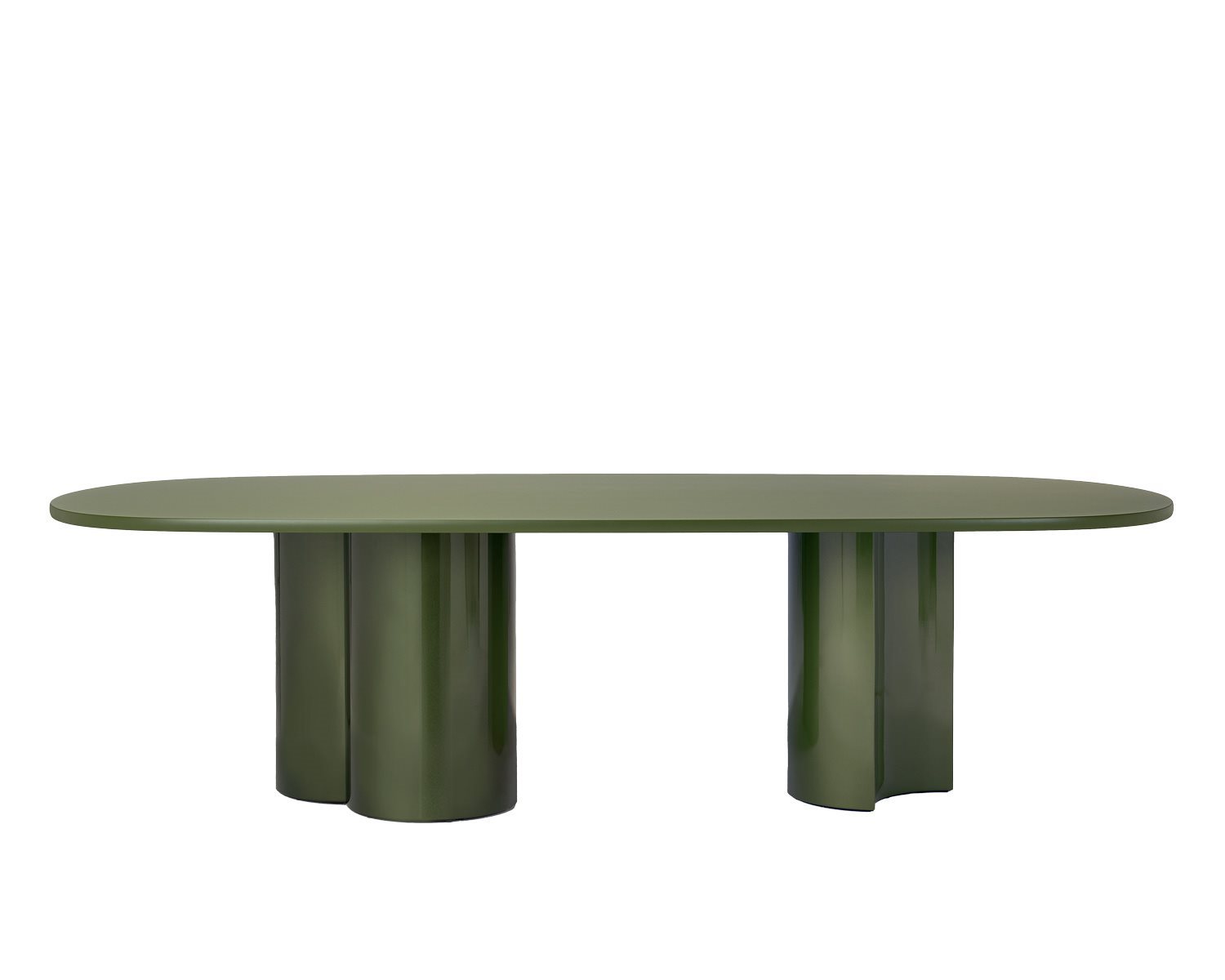
餐桌。底座采用硬质聚氨酯结构,可选哑光或高光漆面处理,提供滑石色、麻色、焦糖色、海藻色、苋红色、浓缩咖啡色及黑色等配色。台面采用 MDF 板材,并以相同配色的哑光漆面完成饰面,实现整体一致的色彩系统。
.jpg)
.jpg)
.jpg)
.jpg)
.jpg)
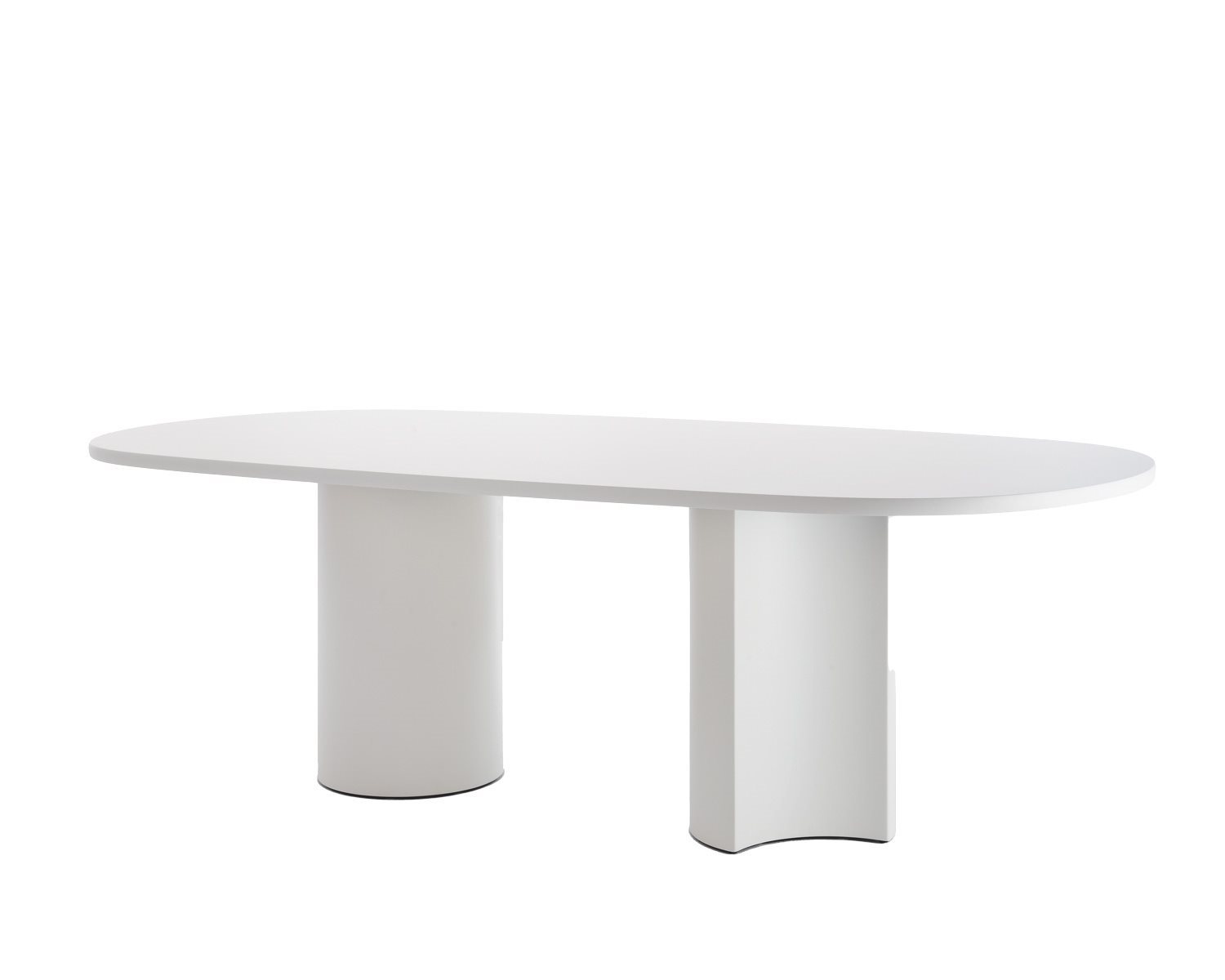
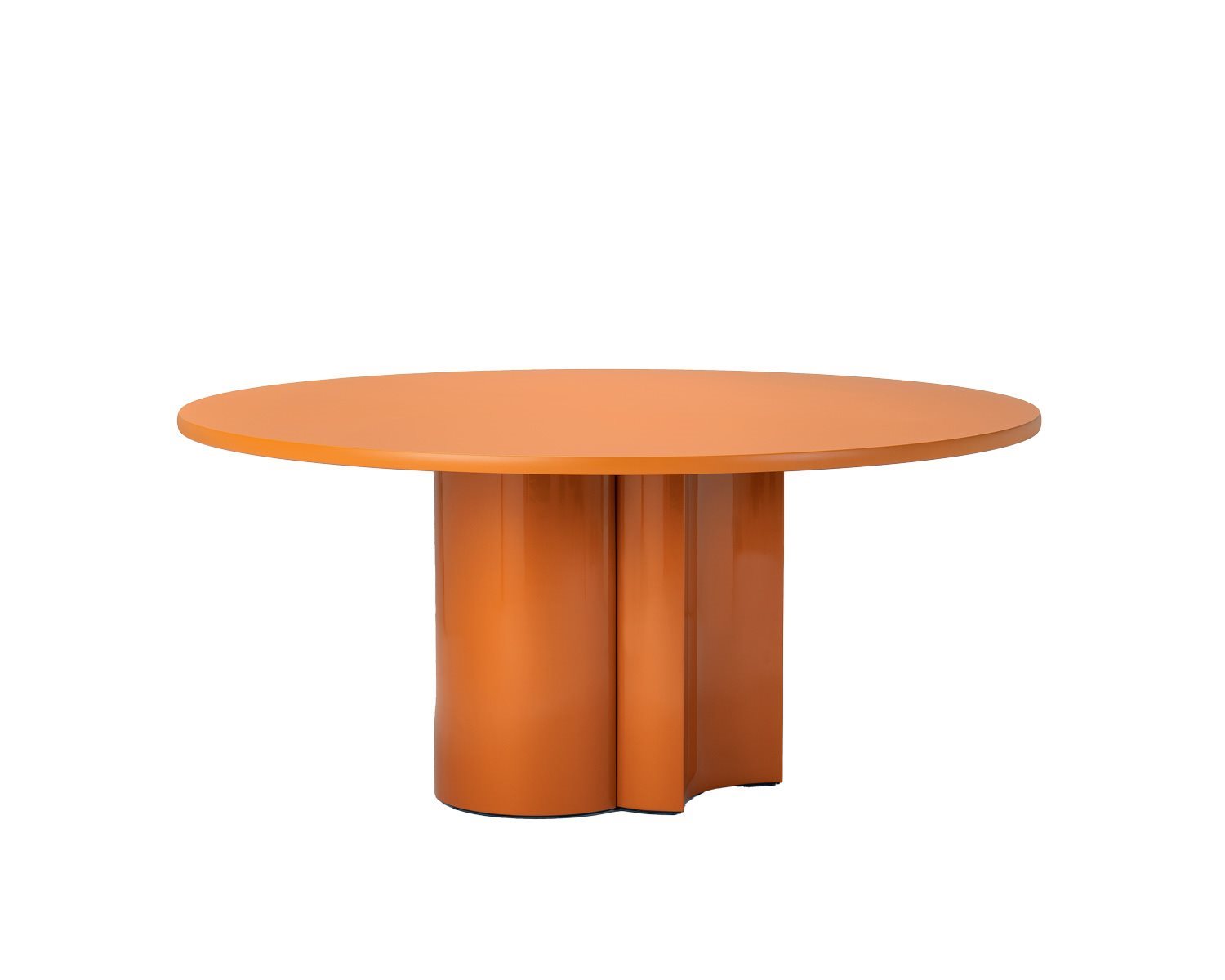
“在我们的设计语言中,我们喜欢运用基础几何形状与体量,让它们彼此互动并组合,从而生成复杂的造型。Bol 桌正是这一过程的一个典型例子,它创造出一种造型精准且具有视觉冲击力的产品。”——Zaven(Marco Zavagno 与 Enrica Cavarzan)
.jpg)
从一张带中央支撑腿的圆桌草图出发,设计师进一步发展出模块化概念,构建出一个完整系列。该系列包括两款圆形桌面(直径分别为135厘米和160厘米)以及两款椭圆形桌面(长度分别为230厘米和260厘米)。设计的核心在于结构底座,它被构思为可单独使用或组合使用的模块化单元,由两个不对称桌腿构成:其中一个腿体源自圆周的一小段切割形成的圆柱体,造型低调却极具辨识度,既具有鲜明的设计语言,也服务于整个系列的结构发展。该桌腿既可单独使用(在桌面尺寸允许的情况下),也可成对组合使用,以提升桌面的整体稳定性。
.jpg)
La seconda base è creata combinando due o più moduli tra loro in modo da ottenere un bilanciamento visivo asimmetrico. Completano il progetto le scelte cromatiche, con tinte contemporanee come talco, caramello e verde alga e le finiture: il piano in MDF è sempre opaco, mentre la base in poliuretano rigido, oltre al laccato opaco, è disponibile anche in laccato lucido della stessa tonalità del piano, così da creare un contrasto e permettere alla luce di giocare con le superfici, restituendo ombre e riflessi. Il tavolo risulta così diverso a seconda del punto di osservazione e dall’interazione con la luce.