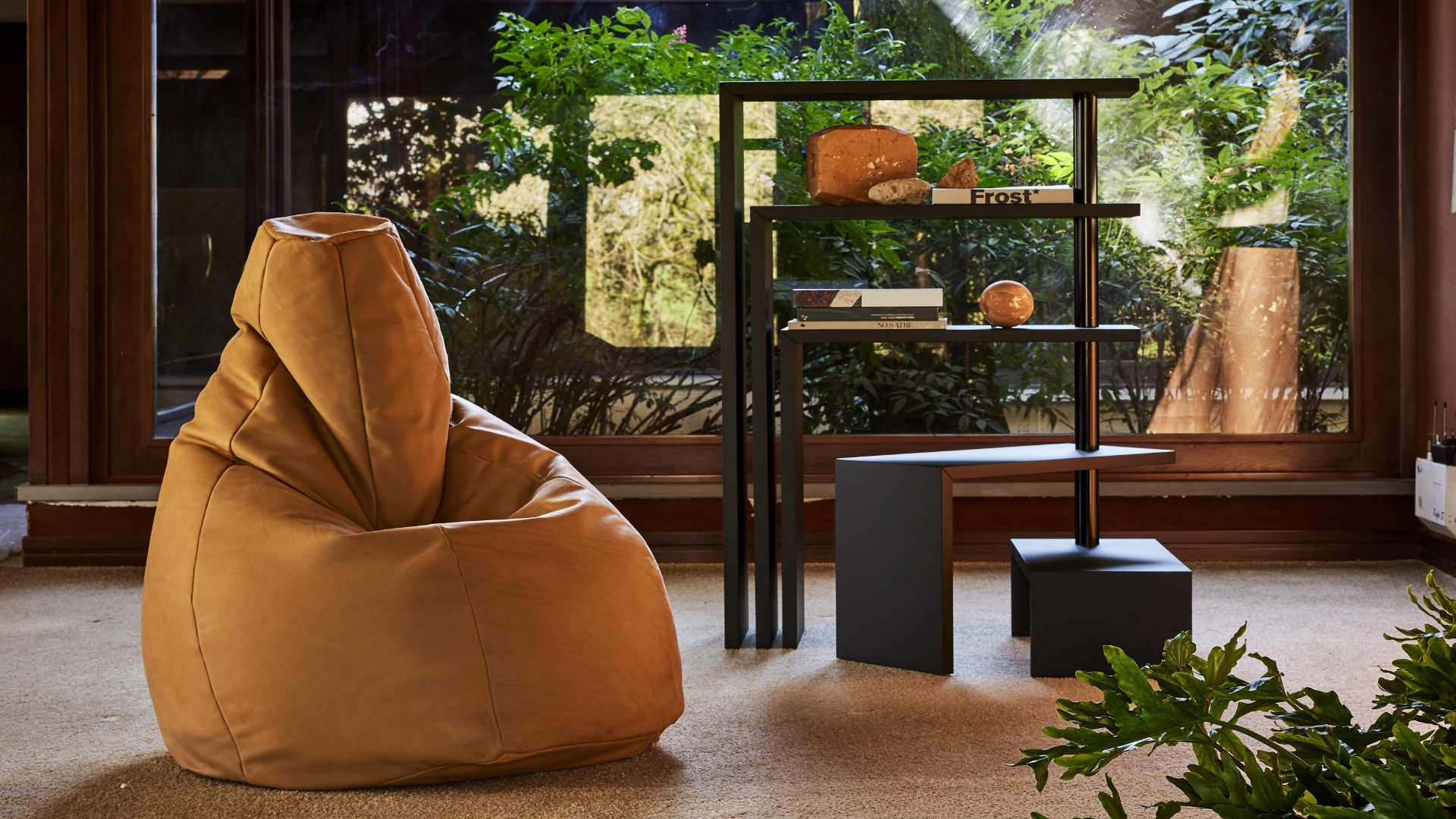
Zanotta announces an important milestone this year. The Italian company has obtained the exclusive licence to produce thirty works designed by the renowned Turin-born architect Carlo Mollino, following a public tender issued by the Italian State.
A landmark achievement for design culture, this reinforces the company’s role as both custodian and champion of Italy’s design heritage. Through this important collaboration with the Italian State, represented by the Agenzia del Demanio (Italian Property Agency), Zanotta reaffirms its long-standing commitment to preserving and celebrating the legacy of Italian design. By bringing Carlo Mollino’s work back into production, the company aims to promote and ensure the continued appreciation of one of Italy’s most visionary designers.
Born in Turin in 1905, Carlo Mollino is widely regarded as one of the leading figures of Italian aesthetics in the 1950s. His design language combines abstraction and surrealism, zoomorphic forms and anatomical lines, arabesques and sinuous trajectories, creating a rich universe of references that continues to feel remarkably relevant today.
Mollino passed away in Turin in 1973, leaving behind an extraordinary professional archive. The Fondo Carlo Mollino, housed at the Polytechnic University of Turin (Politecnico di Torino), comprises almost 17,000 graphic plates, technical drawings and sketches, around 15,000 photographs, more than 70 handwritten and typed fi les, and an extensive collection of personal and professional correspondence.
The thirty projects covered by the licence, selected from the architect’s estate, bear witness to the complexity of Mollino’s creative process. What makes them particularly significant is that none of these works has ever been reissued since its original production.
A substantial number of these pieces were originally created by Mollino as bespoke commissions, conceived as one-off works and therefore not easily suited to the requirements of industrial production. Zanotta’s effort has therefore focused on a carefully considered selection, based not only on the historical and design signifi cance ofthe pieces, but also on their production and commercial potential. The aim has been to translate these works into contemporary products while preserving the integrity of Mollino’s original vision.
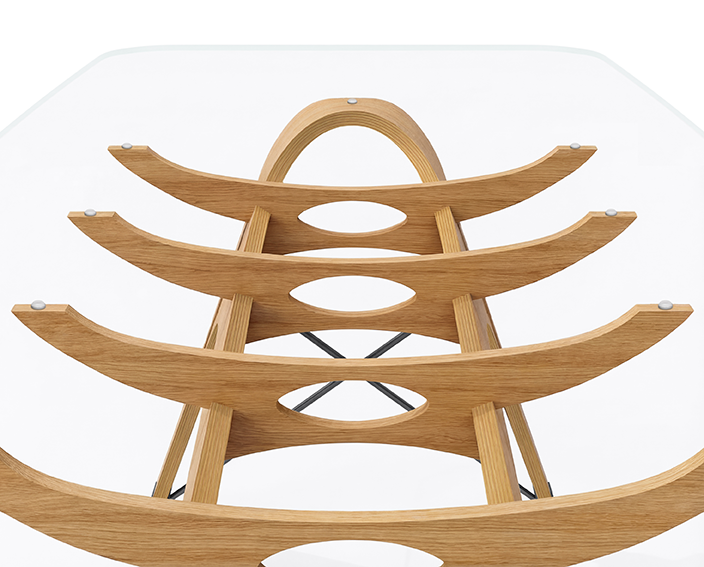
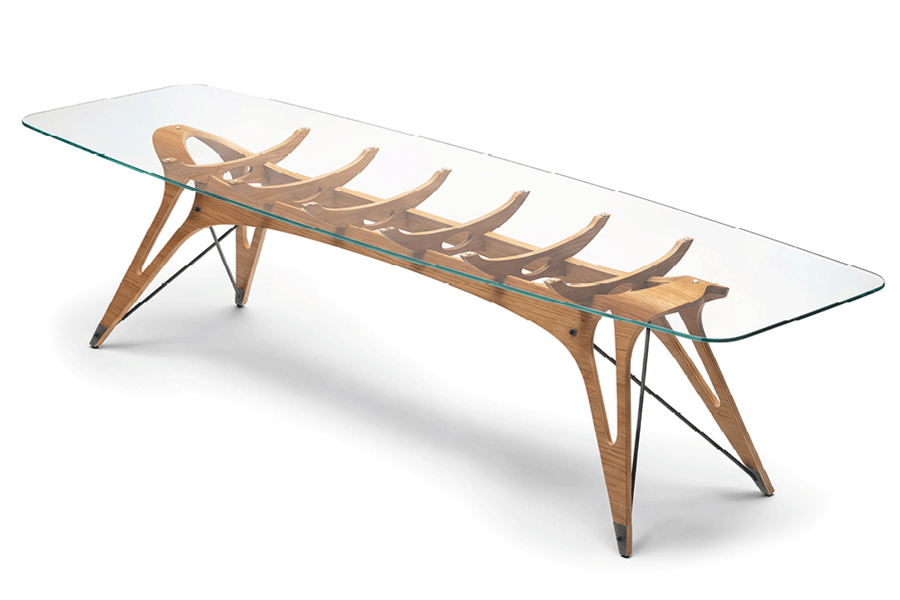
During Milan Design Week 2026, Zanotta unveiled the Vertebra table for the first time, an extraordinary Carlo Mollino design and the emblem of this important acquisition. The table took centre stage in the installation at the brand’s flagship store.
The Vertebra table is one of the most emblematic expressions of Carlo Mollino’s exploration of furniture as a living organism. Designed in the 1950s, it takes its name from the load-bearing structure, which recalls the human spine, transforming an anatomical element into both a structural and compositional principle. Its complex configuration, distinguished by a sophisticated balance between structural tension and visual lightness, reflects Mollino’s experimental approach and the exceptional level of craftsmanship required for its production.
This concept is rooted in the broader design philosophy of the Turin-born architect, who viewed furniture as an extension of the body in motion. An architect as well as a skier, racing driver and passionate aerobatic pilot, Mollino translated his fascination with movement into fluid lines, organic forms and sinuous geometries, creating designs that evoke balance, speed and lightness.
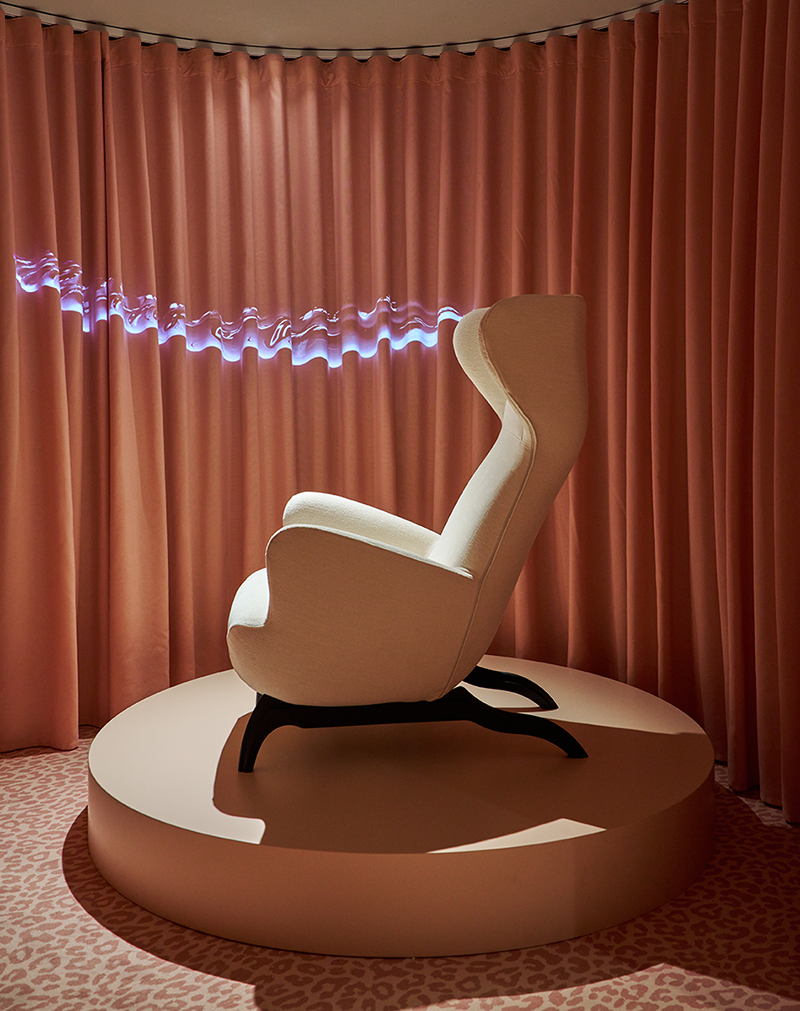
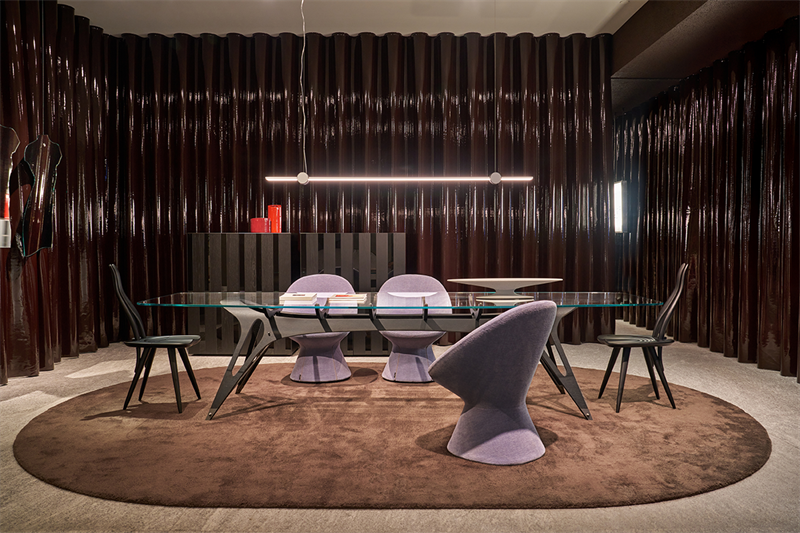
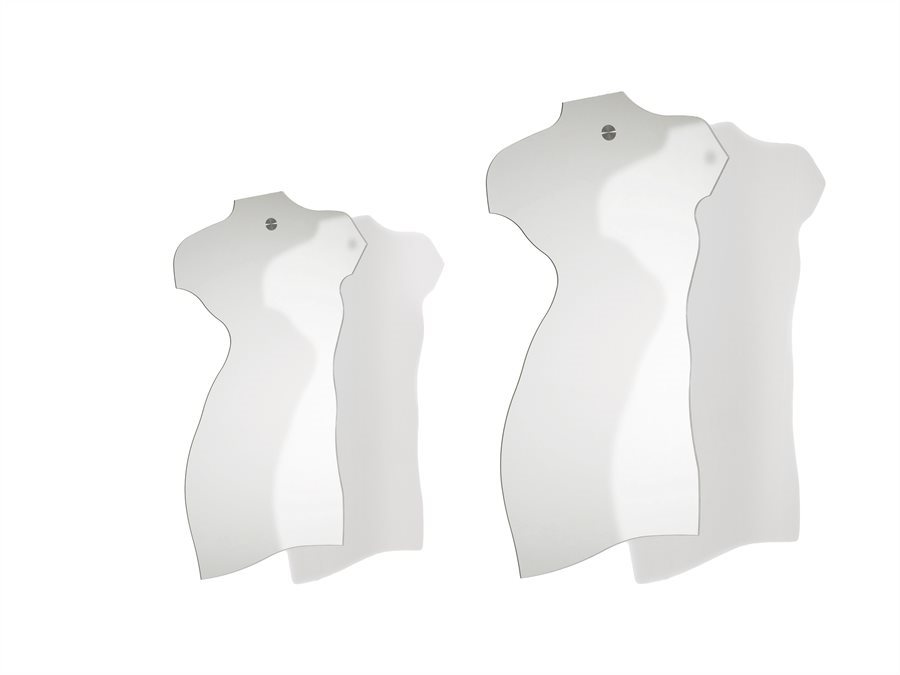
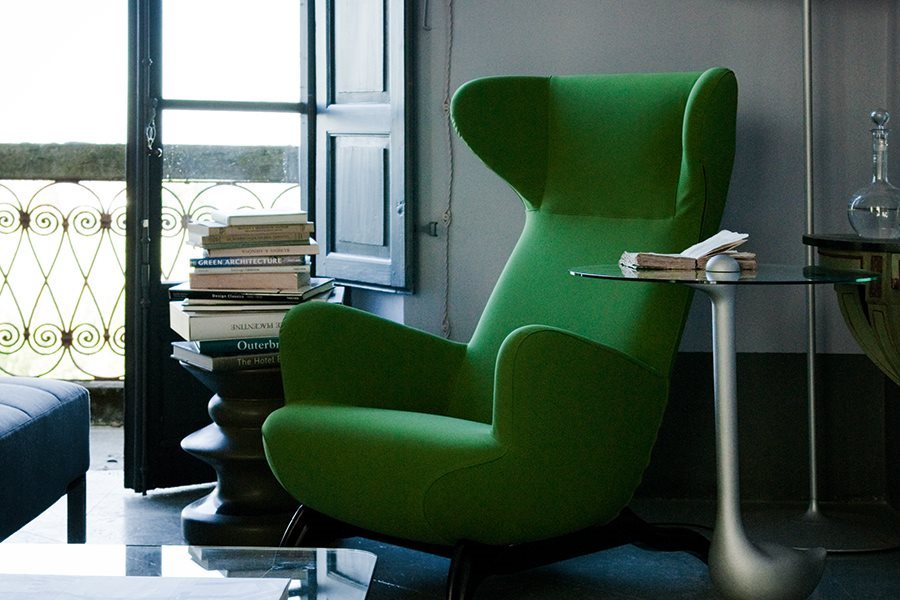
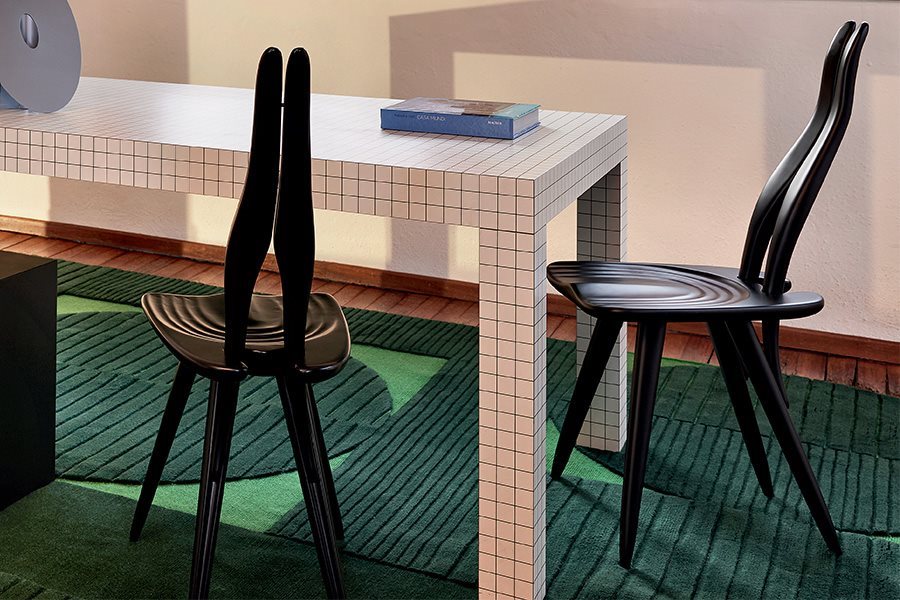
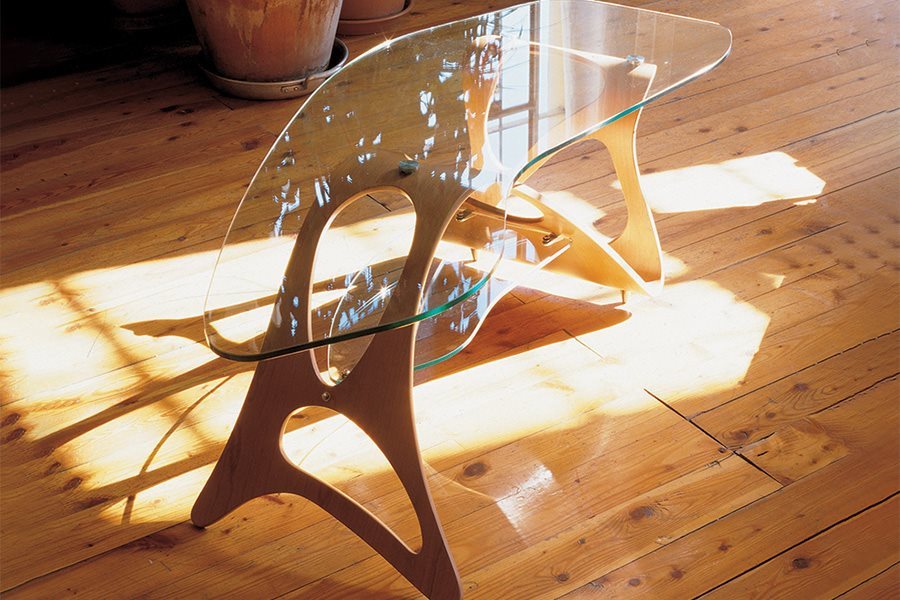
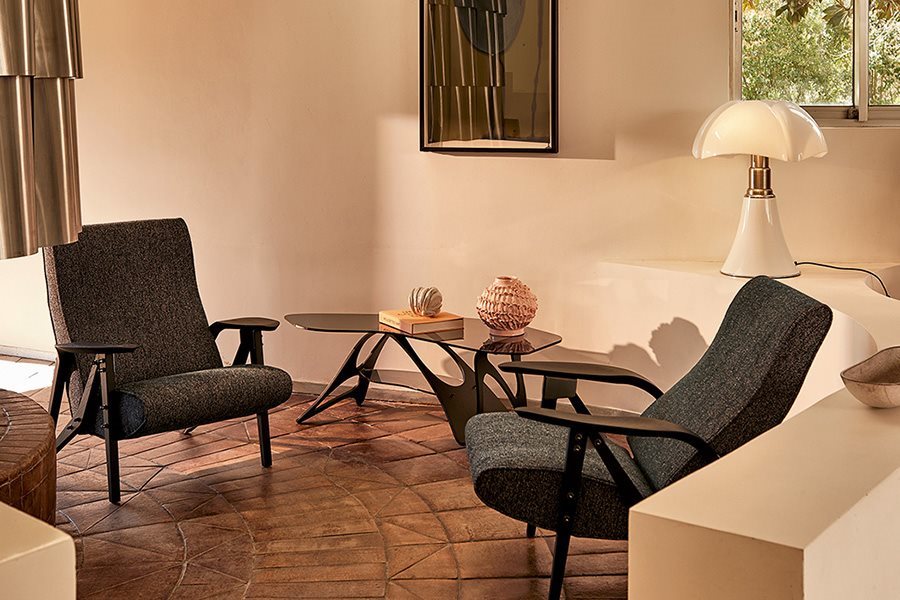
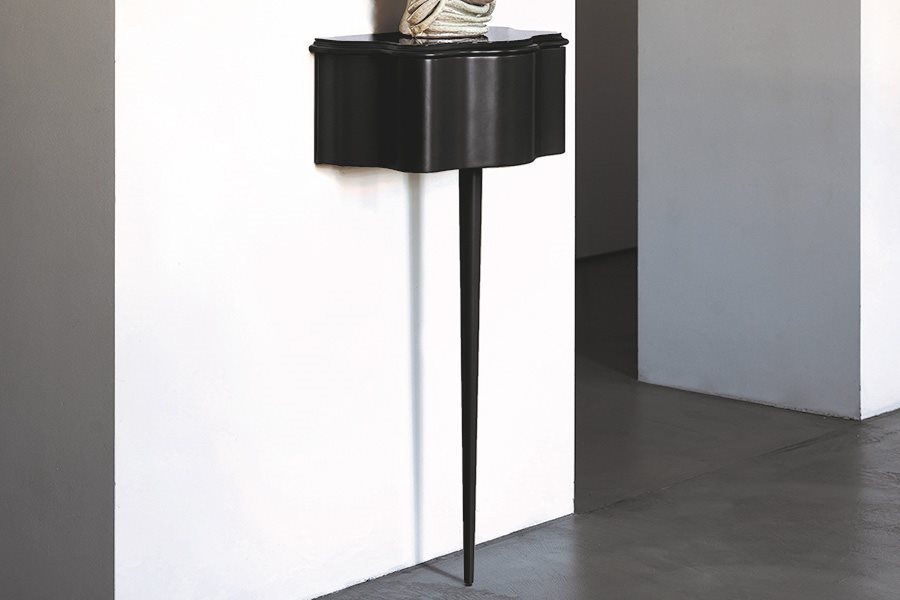
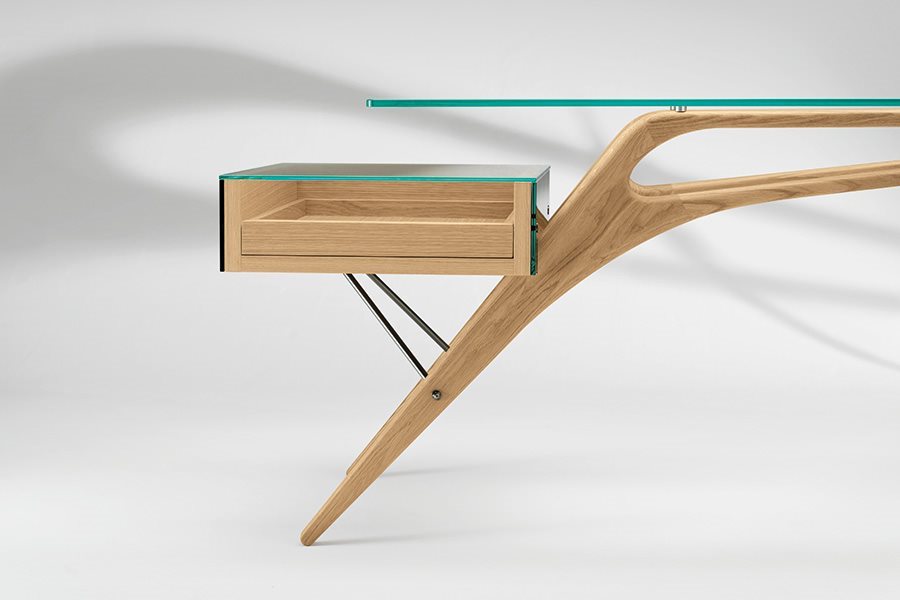
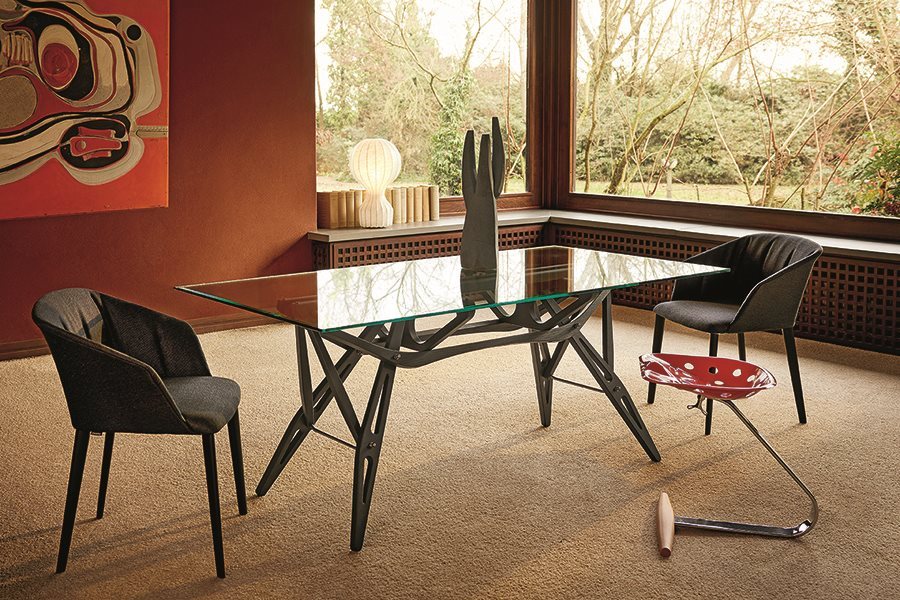
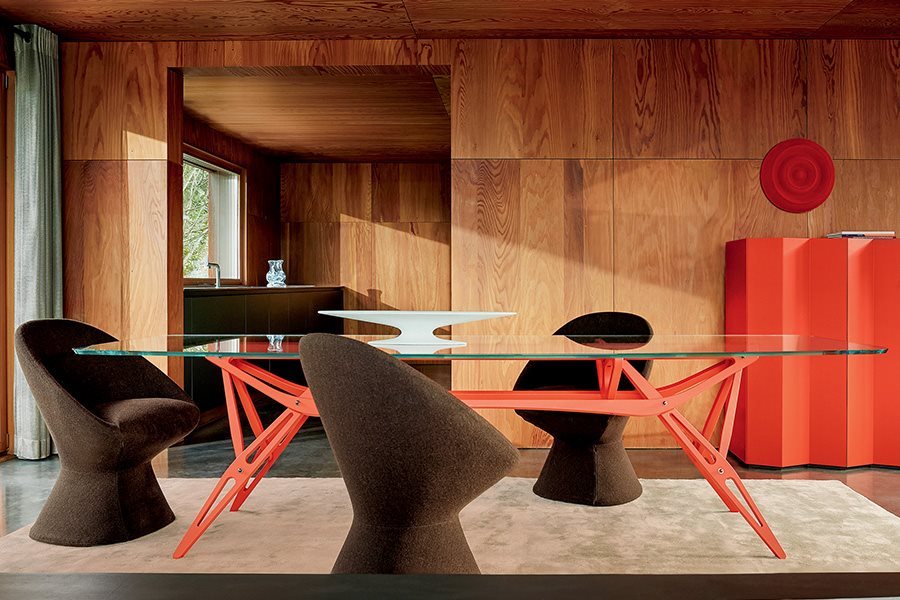
On this occasion, Zanotta also presented seven historic Carlo Mollino designs already in production: the Fenis CM chair, distinguished by its sculptural wooden frame; Gilda CM, an elegant adjustable armchair combining mechanical ingenuity with refined comfort; Arabesco CM, a side table characterised by its fluid, decorative lines; Ardea CM, a chair defined by its sinuous, enveloping forms; the Reale CM table, renowned for its complex architectural structure; the Cavour CM desk; and Carlino CM, the almost metaphysical storage unit. Completing the presentation, the Milo CM mirror was unveiled this year in a new XL version.
Together, these pieces demonstrate the enduring relevance and expressive power of Mollino’s design language. They represent not an archive to be preserved, but a legacy to be reinterpreted with the same care and creative freedom that have always defined Zanotta’s relationship with the history of Italian design.
View all
View less